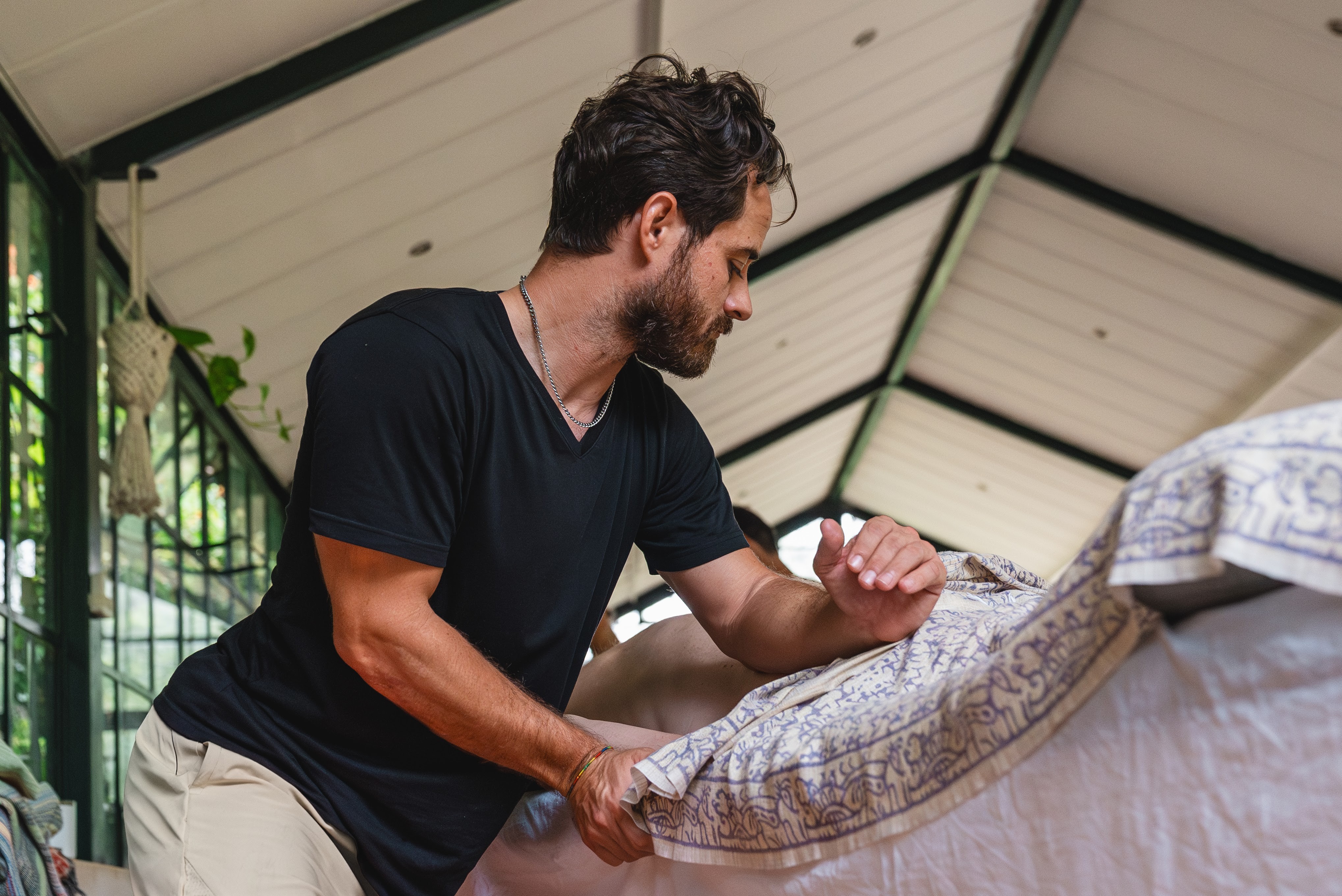
Slow, deep bodywork for the parts of the nervous system that armor never reached. Held over five sessions, in a space designed for the tissue to feel safe enough to let go.
This work lives in the space where body and psyche meet — where connective tissue, emotion, and awareness weave together. It is myofascial release, deep tissue, and somatic presence held in one container.
Fascia is the body's connective tissue web — both structure and sensing organ. When we brace against pain or suppress feeling, fascia thickens and contracts, holding those experiences in place. Over time, those imprints shape how we breathe, how we move, even how we meet the world.
The work is not about pressing hard or pushing through. It is about creating the conditions for the nervous system to soften, for old fascial patterns to release, and for deeper layers of presence to emerge. The deeper we go, the slower we move.
This work is rooted in the Myofascial Somatic Liberation tradition — a method developed by Daniel Wendt that blends modern fascial anatomy with somatic and energetic awareness. Read about the lineage →
Chronic tension is not a stubbornness of muscle. It is a nervous system still bracing for something the mind has long since put away. You can stretch it, you can push through it, and the holding pattern will remain — because the fascial tissue is doing exactly what the nervous system asked it to do. Brace and protect, until something gives the system a different message.
Under stress or injury, the body releases cortisol, and fascial tissues contract. When prolonged or unresolved, contraction hardens into long-term patterns — bracing, restriction, pulling. The imprint of how we have lived, protected ourselves, adapted. Tissue carries what the nervous system never finished metabolizing.
Fascia is not a stack of separate sheets. It is one continuous, living web. To meet one layer is to touch them all — which is why a release in the chest can change the breath, why softening the legs can bring ease to the back, why a gentle contact with the jaw can affect the pelvis. The body works as a whole.
The nervous system does not let go of armor on demand. It releases when it has been met with patience long enough to trust that this contact is safe. Most pain held for years is held there because the system has never had that experience.
A timelapse from a recent session — the slowness on the table is the work itself. What you'll see compressed into seconds is, in real time, the patient unwinding of a system that has been holding for years.
A 2-hour session, condensed.
Holding bodywork at this depth is, before anything else, a question of who is in the room with you. The lineage of the technique matters. So does the lineage of the person.
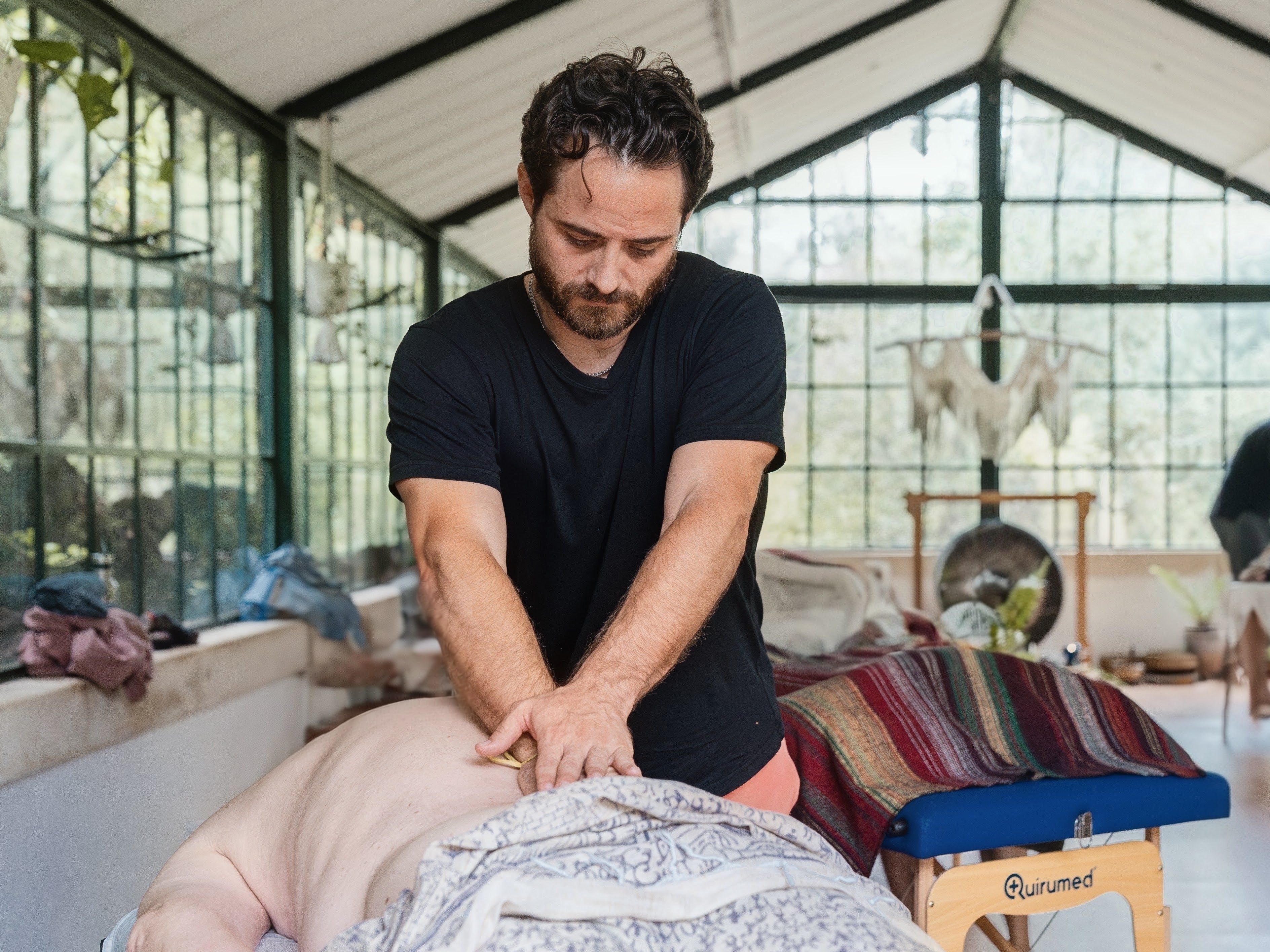
Certified through Daniel Wendt's Level 1 training in Lisbon, Portugal — a deep immersion in the fascial body, the principles of slow touch, and the somatic intelligence of each body region: back, legs, abdomen and hips, chest and shoulders, neck and face.
The work itself is rooted in the lineages of myofascial release (Rolf, Barnes), somatic nervous-system work (Reich, Levine), and the contemplative touch traditions of Esalen — synthesized into a contemporary practice by Daniel Wendt. The training emphasizes presence over technique, listening over imposing, and the practitioner's own nervous system as the foundation of everything that follows.
View the Level 1 training →I grew up in a family where giving and receiving massage was simply how care moved between people. As an athlete — Princeton football, Ivy League championship — I went through every rehabilitation modality a serious body asks for. Of all of them, deep bodywork was the one that changed something. Not just the muscle. The pattern underneath it.
The past decade has been a long apprenticeship in holding space for other people's nervous systems. But I began with my own. Years of daily mindful movement and meditation. The slow, private practice of self-massage — relearning the language between breath, sensation, and the body holding them. And the deepest bodywork of my life, received from hands that knew how to listen.
As a coach, I've held space in hundreds of sessions and dozens of retreats — each one a real, attuned container, not a script. Coaching at depth is nervous-system work; what looks from the outside like conversation is, from the inside, deep listening. It is the practitioner staying regulated while the client moves through territory that destabilizes them. Those are the same skills the table asks for.
What I bring to the table is not just hands trained in technique. It is a nervous system trained, over years, to stay present in the presence of someone else's intensity. That is what makes the work go deep without going wrong.
A note on credentials: I am not a licensed massage therapist. This work is offered as somatic, fascial, and nervous-system bodywork in the tradition of Myofascial Somatic Liberation — a wellness and embodiment practice, not medical treatment. If you are managing a medical condition, please consult your physician.
It's been a really neat experience and thank you so much for all these beautiful sessions you've done with me...the beautiful setting, the work. All this has been such a blessing.
— Janelle · Five-session container
It's like an energy release and an energy transfer... I felt like you were pulling a net of ants out of my body... I feel real good. My leg feels good.
— Max · Five-session container

The outdoor session environment · Private Lake · Miami
I do not offer single sessions. This work asks for an arc — for the system to know it has more than one chance to drop in, and that the practitioner will be there for the next session, and the one after that. Trust unfolds across weeks, not minutes.
Each session has three movements:
The intake call is free, lasts 30 minutes, and helps us both decide whether this container is the right fit. No selling, no pressure. If after the call you want to book the package directly, you can.